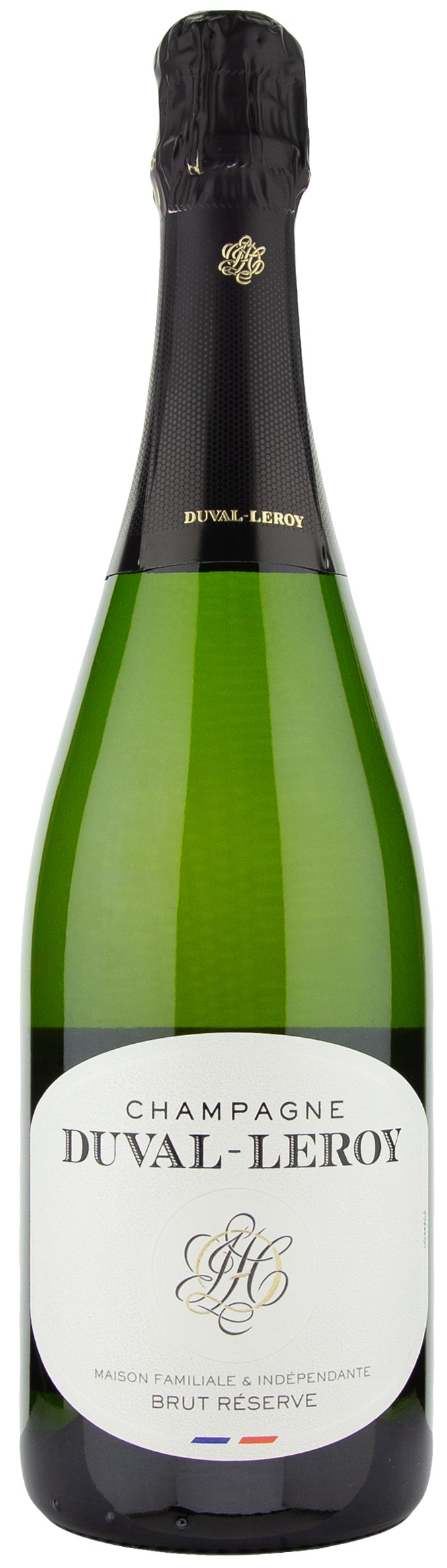
The actual product may vary from the images shown on the website.
Sparkling dry
A classic non-vintage Champagne from the house, based on ‘Pinot Noir’ and complemented by ‘Meunier’ and ‘Chardonnay’. The cuvée is assembled from around 15 different crus, with at least 40% of the blend made up of reserve wines. This broad base of different origins and vintages helps maintain a consistent house style while giving the wine greater depth and vinous complexity.
The nose is dominated by citrus and white fruit, particularly apple and pear, complemented by subtle floral notes and toasted almond. As the wine opens, more pastry and nutty nuances emerge, reflecting its ageing on the lees.
On the palate, the Champagne is fresh, balanced and distinctly vinous, with lively acidity and a soft texture. ‘Pinot Noir’ provides structure and body, ‘Meunier’ contributes fruitiness, while ‘Chardonnay’ maintains the citrus-driven freshness. The finish is clean, with lingering notes of citrus, apple, pear and lightly toasted almonds.
The wines are vinified separately according to their origin, using cultured yeasts, and undergo malolactic fermentation. After natural clarification, the Champagne is aged on its lees for approximately 30–36 months.
Dosage: 8 g/l.
Champagne is best served at a temperature of 8–10 °C and pairs well with oysters, pan-fried shrimp with garlic and butter, or chicken with a light sour cream sauce.
Very aromatic, showing orange-blossom and Meyer-lemon aromas that follow through to a full body with a flint and matchstick undertone, turning to fresh strawberries. Bitter lemons at the end. Drink now. Monday, Jul 14, 2025
Established in 1859 in the village of Vertus, in the heart of the prestigious Côte des Blancs, the Champagne house Duval-Leroy was founded by wine merchants Jules Duval and Edouard Leroy. After World War II, their production began to grow rapidly, and the company further strengthened its position when Jean Charles Duval took over its management. He introduced modern technologies and advanced equipment, significantly contributing to the company's expansion. Following the unexpected death of J. Ch. Duval, his wife Carol Duval-Leroy, often referred to as the "iron lady," took the helm. Following the example of famous Champagne widows – Veuve Clicquot, Lily Bollinger, and Louise Pommery – she continues to successfully lead the company to this day.
In 2007, Carol Duval-Leroy became the first woman elected as the head of the Association Viticole Champenoise (AVC), demonstrating her leadership and influence in the region. Duval-Leroy owns 200 hectares of vineyards in the prestigious Côte des Blancs, Montagne de Reims, and Vallée de la Marne regions and is the ninth-largest vineyard owner in Champagne. It is a family-owned company that has managed to remain independent even as major Champagne producers were being sold or merged with large conglomerates. The high quality of their Champagnes is consistently recognized – in 2008, Duval-Leroy was the only Champagne to be included in the list of the World's Top 100 Wines, and in recent years, almost all of their main Champagnes have been rated 90 points or higher.
Wine Style
Duval-Leroy Champagnes are characterized by elegance, subtlety, and excellent balance, reflecting the specific terroir of the different Champagne regions. Great emphasis is placed on the ‘Chardonnay’ variety, which dominates their vineyards in the Côte des Blancs.
Prestigious Vineyards
Duval-Leroy owns vineyards in three main Champagne regions, each contributing to the character of their Champagnes:
The yields from these different terroirs and meticulous work in the cellar allow Duval-Leroy to create diverse and high-quality Champagnes.
Aging and Drinking Period
Duval-Leroy Champagnes are aged in cellars for an extended period, often exceeding the appellation requirements. This imparts greater complexity, finer bubbles, and a longer finish. While some Champagnes can be enjoyed in their youth, the top-tier cuvées, especially the “Blanc de Blancs,” have excellent potential to age and evolve for many years, gaining even more elegance and nuance. Duval-Leroy Champagnes are valued for both their youthful freshness and their mature complexity.