1–10 of 10
Sake is the national drink of Japan, born from four pure ingredients: rice, water, koji mold, and yeast. Often mistakenly referred to as "rice vodka" or "rice wine," sake is actually a unique fermented product. In terms of production complexity, it is closer to beer, while in its subtlety and aromatic profile, it rivals the finest wines. Our assortment features a carefully curated selection of sake from Japan's top kura (breweries), reflecting various polishing ratios and regional styles. Discover the elegance of the Land of the Rising Sun in your glass.
The quality and style of sake depend heavily on how much the rice grain is milled or "polished." By removing the outer layers, which are rich in fats and proteins, the brewer reaches the starchy core of the grain. The more the rice is polished, the lighter, fruitier, and more elegant the resulting sake becomes.
To understand the label, it is helpful to recognize these key terms:
Contrary to popular belief, premium sake (Ginjo and Daiginjo) is usually served chilled (much like white wine) to preserve its delicate aromas. Traditional Junmai styles, however, can be enjoyed warm, at room temperature, or chilled, depending on the season and preference.
Sake is one of the most versatile beverages in gastronomy due to its high umami content. It pairs perfectly not only with sushi or sashimi but also with oysters, hard aged cheeses, and mushroom dishes. Explore pairings in our snacks for wine section.
Sake is best enjoyed fresh (within 1–2 years of production). Once opened, we recommend keeping it in the refrigerator and consuming it within a week to maintain its aromatic integrity.
It is an excellent gift for those seeking exoticism, aesthetics, and refinement. A Daiginjo sake in premium packaging is highly valued by gourmets and enthusiasts of Asian culture.
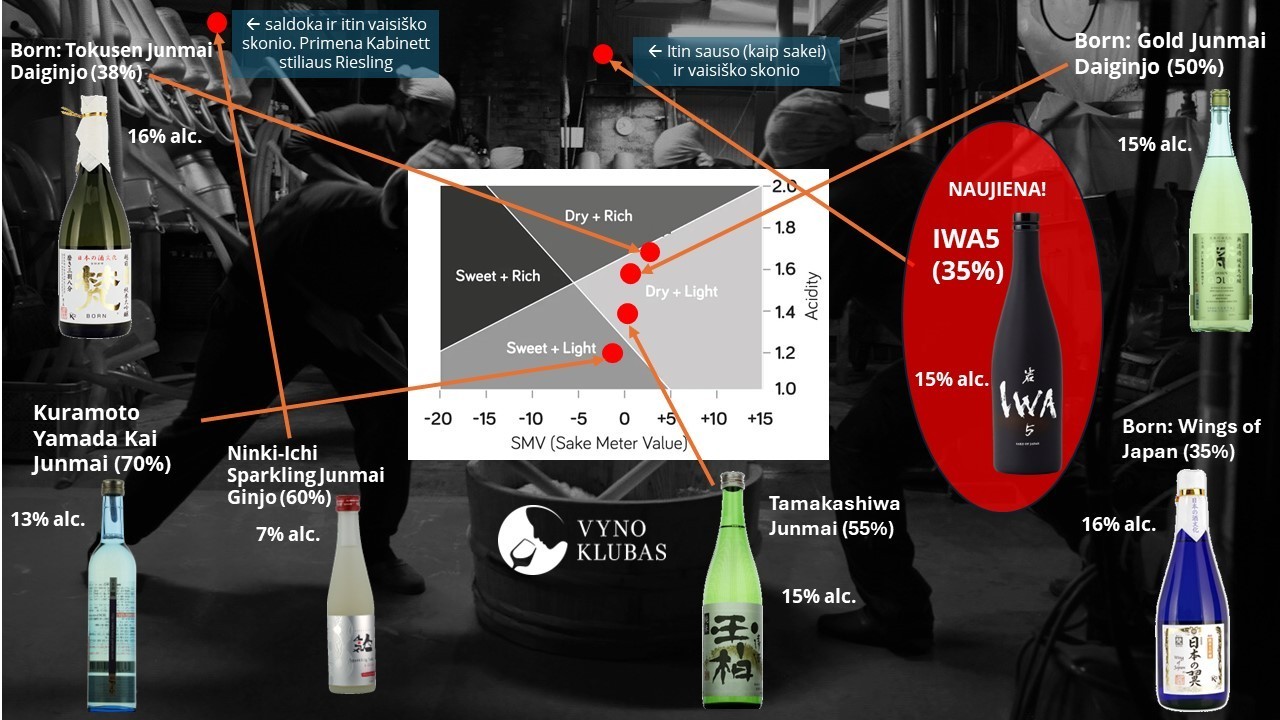
In the diagram you can see which styles we can classify the sake in our range.