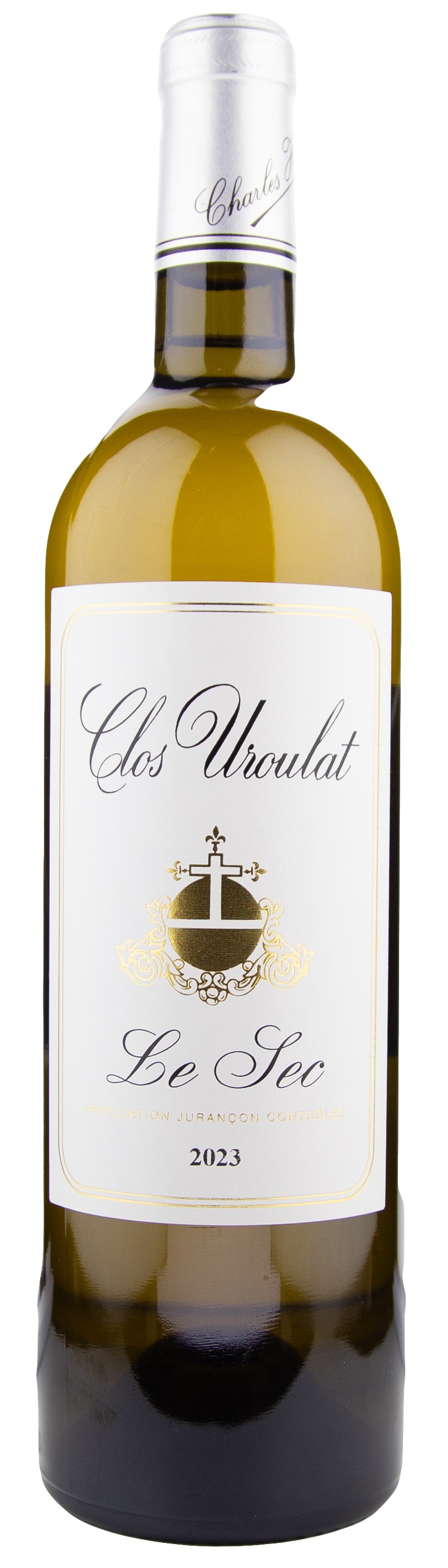
The actual product may vary from the images shown on the website.
White dry
Modern, refined, and expressive dry white wine from the Jurançon AOC region in southwest France. It is crafted by the renowned winemaker Charles Hours – a pioneer who revealed the true potential of the ‘Manseng’ grape and helped establish Jurançon as one of France’s most distinctive white wine regions.
This wine represents the perfect balance between Jurançon’s classic elegance and precise structure. Made entirely from the local ‘Petit Manseng’ grape, it captures the harmony of the region’s Atlantic freshness and mountain slope ripeness.
The aroma is intense yet refined – with notes of lemon zest, green apple, ripe white peach, acacia blossom, and wet stone. Subtle hints of herbs and almonds add depth and finesse.
On the palate, the wine is full-bodied yet luminous, marked by a precise acidic backbone and a smooth, rounded texture. Flavors of citrus energy, gentle fruitiness, and a touch of saline minerality emphasize its terroir-driven identity. The finish is long and clean, leaving a sense of clarity and balance.
The grapes grow around Monein, on limestone and clay slopes situated 200–400 meters above sea level. The Atlantic influence and Pyrenean winds ensure slow, even ripening, preserving both freshness and aromatic intensity.
Fermentation takes place with wild yeasts, and the wine is aged for 10–12 months, partly in oak barrels and partly in stainless steel, achieving a perfect harmony between texture and freshness.
Serve at 10–12 °C with baked fish, crayfish or shrimp risotto, mild goat cheese or citrus chicken dishes.
Located in the Jurançon region of south-western France, at the foothills of the Pyrenees, Clos Uroulat is a family estate dedicated to expressing the character of local white grape varieties, mainly ‘Petit Manseng’ and ‘Gros Manseng’. The estate is situated around the village of Monein, one of the most important viticultural areas of Jurançon, where the influence of the mountain climate and Atlantic winds helps preserve natural acidity and aromatic precision in the grapes.
Since the early 1980s, Charles Hours and his family have been cultivating around 17 hectares of vineyards. His work has contributed to the modern identity of Jurançon, focusing not only on sweetness and concentration, but on the balance between ripeness, acidity and terroir expression.
The vineyards are located at altitudes between 200 and 400 metres, on clay, sandstone and limestone-based soils. These conditions allow ‘Petit Manseng’ to develop high natural sugar levels and complex aromas while maintaining the vibrant acidity that defines the character of the region.
Clos Uroulat is best known for its late-harvest sweet Jurançon wines made from ‘Petit Manseng’, while also producing dry white wines.
The sweet wines are characterised by their concentrated texture, but their identity is defined not only by sweetness, rather by the balance between richness, acidity and minerality. Aromas often reveal exotic fruits, citrus peel, honey, dried fruits and spice notes. Thanks to their naturally high acidity, these wines have excellent ageing potential.
The dry Jurançon Sec wines are produced from ‘Gros Manseng’ and ‘Petit Manseng’. They display notes of citrus fruits, white flowers, herbs, and mineral nuances reminiscent of stone and salinity. These wines highlight freshness, precision and the character of the local soils.
The most important Clos Uroulat vineyard sites include:
Clos Uroulat – the estate’s main vineyard, where older ‘Petit Manseng’ vines are planted. This site produces structured, age-worthy sweet Jurançon wines with depth and complexity.
La Cana de l’Ours – a vineyard with predominantly limestone soils, used for the production of dry Jurançon Sec wines.
The estate places strong emphasis on preserving the individual character of each vineyard plot. Winemaking decisions are adapted to the conditions of each site, allowing the natural expression of the grapes and terroir to remain at the centre.
The wines are produced using traditional methods, with fermentation and ageing often taking place in French oak barrels for around 10–12 months. Oak is used to add texture and complexity rather than dominate the wine’s character. The aim is to preserve the defining qualities of Jurançon: aromatic intensity, acidity structure and minerality.
Clos Uroulat’s sweet wines have significant ageing potential, developing over time into more complex expressions with notes of nuts, caramelised fruits and tertiary aromas. The dry wines emphasise freshness and mineral character in their youth but can also evolve gracefully over several years.