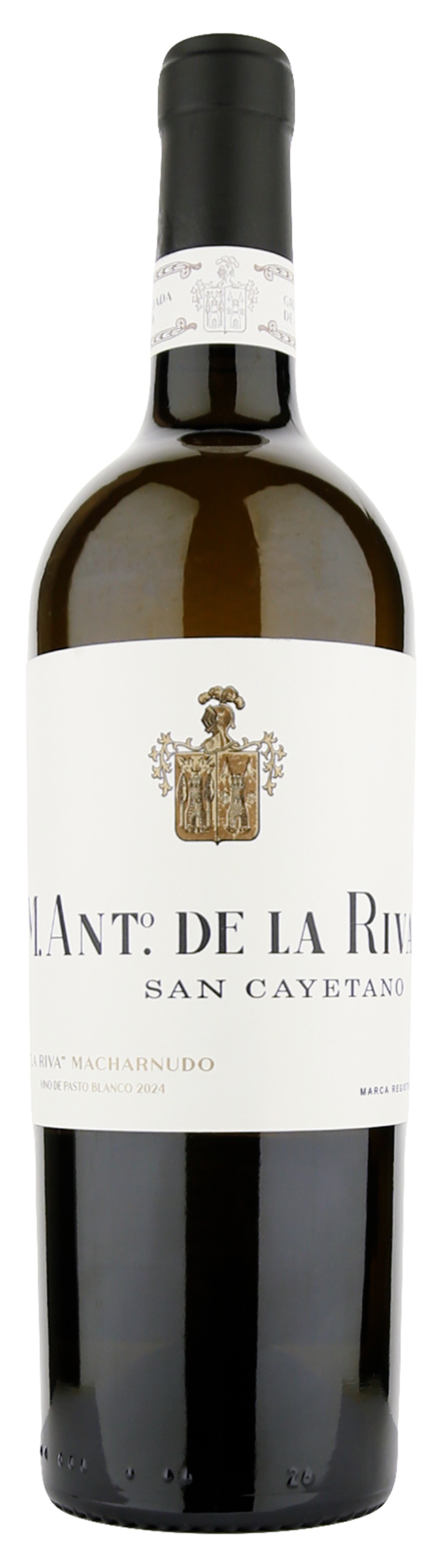
The actual product may vary from the images shown on the website.
White dry
A dry, unfortified white wine (Sp. Vino de Pasto), reflecting the authentic terroir of the Jerez region. The wine is made from 'Palomino Fino' grapes grown in the San Cayetano plot of the legendary Macharnudo vineyard. This historic zone stands out for its exceptionally pure chalky albariza soils, therefore the wine's profile is oriented not towards the traditional oxidative sherry style, but towards a precise expression of the location, variety, and plot.
The aromatic palette is restrained, yet highly multi-layered. It is dominated by notes of iodine, sea salt, citrus peels, and white flowers, accompanied by smoky and light nutty tones. It is a wine of a precise, mineral, rather than fruity profile. On the palate, a deep, structured, and concentrated texture is revealed. The wine is characterized by a pronounced sensation of salinity, a firm mineral axis, and vibrant acidity that transitions into a long finish.
The character of the wine is directly shaped by the geology of the 3.35-hectare San Cayetano plot. The prevailing albariza de barajuelas (layered chalk) soil, formed from the remains of marine microorganisms, gives the wine depth, power, and an intensive texture. In winemaking, minimal intervention principles are followed: the hand-harvested yield is fermented in 615-liter oak barrels with indigenous yeasts. Afterwards, the wine is slowly aged for about a year under a natural flor (yeast) cap.
Serve at a temperature of 10–12 °C. It pairs perfectly with seafood, oysters, richer fish dishes, cured Iberian ham, and aged cheeses.
This opens with iodine, crusted sea salt and a subtle touch of lime, wrapped in delicate floral notes. The palate is saline and expansive, yet ample and incisive, with a deep texture. There’s a solid and angular, almost architectural sense of salinity here, layered and persistent. One of the most compelling expressions of this style. Drink or hold.
The white 2024 Macharnudo San Cayetano comes from a very old plot of Palomino in Pago Macharnudo, San Cayetano, where the natural concentration is very high. San Cayetano has different exposures, and this is selected from the north-facing side, which gives more freshness and elegance to the wines. The year is much better; they have more experience with the vineyard and they gave it less flor, because the wine had the natural concentration and complexity. There might be some 10% of wine with flor (in previous vintages was 15% to 20%) to give it a little bit more salinity. The wine displays a bright, almost fluorescent yellow color and a complex nose, subtle and nuanced rather than explosive. It's still far too young and will gain complexity in bottle and also weight and depth. In two years, this should be a bomb! It has a vibrant palate with pungent sensations and is intensely mineral and very long and sapid. 6,000 bottles produced. It was bottled in September 2025. This is sold exclusively through La Place de Bordeaux.
"De La Riva": A Reborn Jerez Legend and a Return to Historical Roots
The history of "De La Riva" began back in 1858 when Manuel Antonio de la Riva founded a highly regarded winery in Jerez. Although over the years this name was absorbed by large corporations and nearly faded into oblivion, a true turning point occurred in 2017. Two of perhaps the most prominent visionaries and winemakers of modern Jerez, Ramiro Ibáñez and Willy Pérez, brought the "De La Riva" legend back to life.
Today, this project is not just a winery; it is a true manifesto. Instead of following the industrialized and standardized Sherry path, the creators turned back to the region's deepest traditions. The core of their philosophy revolves around historical vineyards, ancient winemaking practices, and a unique sense of terroir. By dedicating special attention to legendary Jerez zones such as Macharnudo and Balbaína, they boldly prove that the region's land can speak not only through fortified wines but also through profoundly serious, terroir-driven unfortified dry whites.
The "De La Riva" portfolio masterfully intertwines two intriguing directions:
Innovative Classics: These are limited-edition annual wines (for example, the famous Macharnudo whites). Although they slowly age under flor (a veil of yeast), these wines maintain the pure identity of an unfortified dry white wine along with exceptional freshness.
Historical Masterpieces: These are true imprints of time—exceptionally rare pearls from old solera systems released in microscopic quantities, Manzanilla, Oloroso, and other historical-style Jerez wines.
It is precisely because of this unique combination and uncompromising respect for the past that "De La Riva" is today considered one of the most exciting wine projects in the world. It is an invitation to rediscover the true depth of the Jerez region and its invaluable heritage.