The actual product may vary from the images shown on the website.
White dry
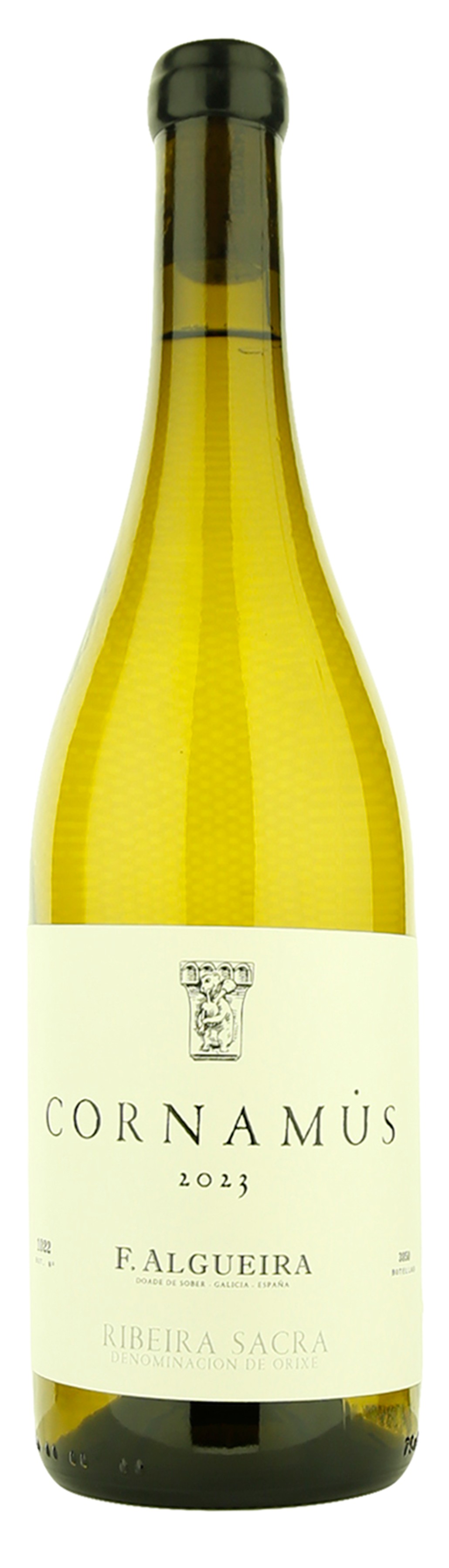
Algueira Cornamus Ribeira Sacra 2023 is a characteristic Galician white wine, reflecting the mountainous landscape of Ribeira Sacra and the local winemaking tradition. The wine is produced by Adega Algueira, one of the most prominent names in the region, working with local varieties for many years and reviving old, steep-slope vineyards in Galicia. Cornamús is created from ‘Godello’ and is conceived as a pure, mineral reflection of this landscape and high-altitude plots.
The aroma is refined and multi-layered: first, citrus, white flowers and white grapefruit open up, then dried apple, chalk, anise and very subtle herbal nuances emerge. It is not an expressively fruity aroma, but more focused on tension, detail and mineral purity.
The wine is concentrated but not heavy: the texture is gently creamy, even a bit waxy, but it is very precisely held by lively acidity and a salty aftertaste. This is a white wine that combines a more mature depth with the tension of a mountain wine, making it both elegant and structured at the same time.
The character of the wine is strongly shaped by its origin. The grapes grow on the slopes of the Ribeira Sacra, on southeast and east exposures, on granite, quartz and gneiss soils, and the cooler highland zone helps to maintain acidity and aromatic precision.
The winemaking here is also very deliberate: some of the berries are separated from the bunches, some are pressed by foot, fermentation begins in stainless steel tanks and is completed in a 1000 l foudre barrel using local yeast, and then the wine is aged for 15 months on the lees in 2000 l French oak foudre with bâtonnage. This path gives the wine a broader texture, but does not overshadow its minerality. In 2023. produced in a very limited quantity – about 3050 bottles.
Serve at 12-14°C with grilled white fish, seafood, chicken cooked in butter sauce or mature cow's milk cheeses.
The nose offers dried apple, chalk and a touch of aniseed. The palate is velvety and ethereal, with incisive, well-integrated acidity that perfectly complements the wine’s texture. This comes from a high-altitude site in Castro Caldelas, Ribeira Sacra, from a parcel known as the Aviator Vineyard, named after one of the inventors of radar who once owned it. At 600 meters, it’s one of the highest vineyards in the region. One of the finest white expressions from Ribeira Sacra. Drink now or hold.
After the red Dolio, they produced a new white to be sold at La Place de Bordeaux, the 2023 Cornamús. It's a Godello, mostly from Aviador, a steep vineyard planted 20 years ago on gneiss, quartz and slate soils, and a small percentage of other grapes. It fermented in stainless steel with indigenous yeasts and matured in a 2,000-liter oak foudre with lees for 15 months. The vineyard is from a cooler, higher-altitude zone (500+ meters) close to Castro Caldelas, and it delivered a vibrant wine with 13.5% alcohol and a pH of 3.2 coupled with six grams of acidity. The nose is different from the other whites. The wine comes through as more nuanced and detailed and is fresh and sharper, with a vibrant palate. 3,050 bottles produced. It was bottled in April 2025. Published: Jul 24, 2025
The Fernando Algueira estate is situated in the heart of Ribeira Sacra, within the rugged mountains of Galicia, where the first vines were planted by the Romans. This 30-hectare estate is rich in history and traditions that span millennia. However, when Fernando Algueira took over the property, most of the vineyards were abandoned. Through time and persistent effort, his team successfully revitalized these ancient plots, bridging ancestral traditions with innovative viticultural methods.
Indigenous Varieties and Winemaking Philosophy
The estate places a profound emphasis on indigenous grape varieties that are perfectly adapted to the climate and soils of the Galician mountains. Initially, the project focused on producing single-varietal wines to reveal the true essence of each grape and achieve a unique varietal character. Over time, their creative ambition to further highlight the distinctiveness of the Ribeira Sacra territory led to the development of blends. Today, these blends have achieved remarkable success among both local enthusiasts and international wine experts.
Exemplary Wines
The wines produced at this estate perfectly reflect the singularity of the Galicia region, merging the innate qualities of native grapes with precise winemaking techniques. These blends are characterized by their unique complexity, balanced palate, and high structural integrity. Their growing popularity stems from an ability to satisfy both the casual connoisseur and the demanding expert. Fernando Algueira has become a true icon of the Ribeira Sacra region, contributing significantly to the revival of local winemaking traditions while innovating through sophisticated blending and experimental production methods.