The actual product may vary from the images shown on the website.
Sweet sweet
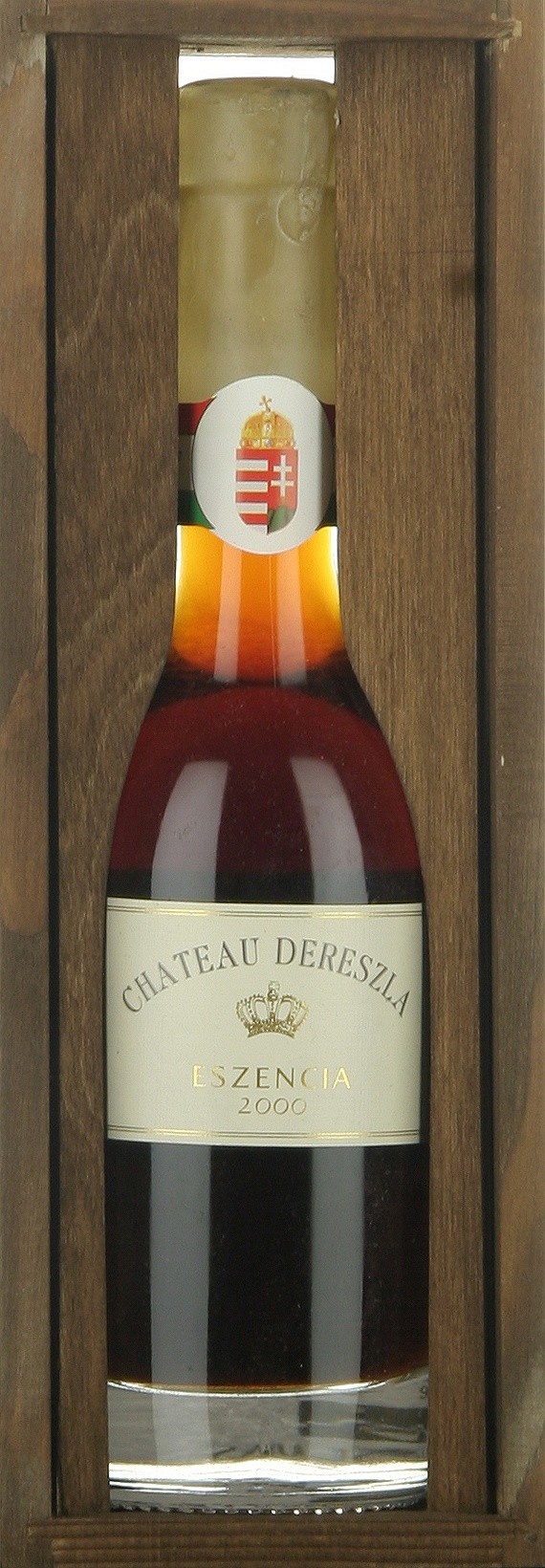
This Tokaji wine nectar is crafted from the exceptional harvest of a 2-hectare vineyard, home to the oldest vines aged 60-70 years. It is produced solely from the juice of botrytis-affected grapes that flowed naturally before pressing. On the nose, we detect notes of apricot, orange, and smoke. On the palate, it is viscous, clean, and concentrated. Despite a residual sugar concentration reaching 600 g/l, the wine is perfectly balanced, with a refined finish. A legendary dessert wine that was once served at the tables of kings.
Residual sugar content: 600 g/l.
Serve at 8–10 °C instead of dessert, with toasted nuts and long-aged cheeses.
The essence of pure apricot. Despite its thick texture, this melts in the mouth as the incredibly vibrant acidity emerges. That makes for a great finish, as the sweet fruit and acidity dovetail and the mineral element takes over. Drink now through 2050. 2,000 cases made, 100 cases imported.
Chateau Dereszla is steeped in rich history when the first mention of the name occurred in 1406 as a storage cellar of wines collected for tax levies for the then king of Hungary. The estate changed hands for many centuries as it moved from Hungarian to Turkish to Austrian rulers until 1945. After WW II, it became part of a Hungarian Cooperative. At the turn of the century, in 2000, the estate was purchased by the French d’Aulan family who quickly modernized and streamlined production to create world-renowned wines. Under this French ownership, the Chateau achieved international recognition and became renowned for their Tokaji Aszu wines. Modernization continued the evolution of the estate and it reached an important milestone when, in 2016, it became once again under Hungarian ownership.