The actual product may vary from the images shown on the website.
Red dry
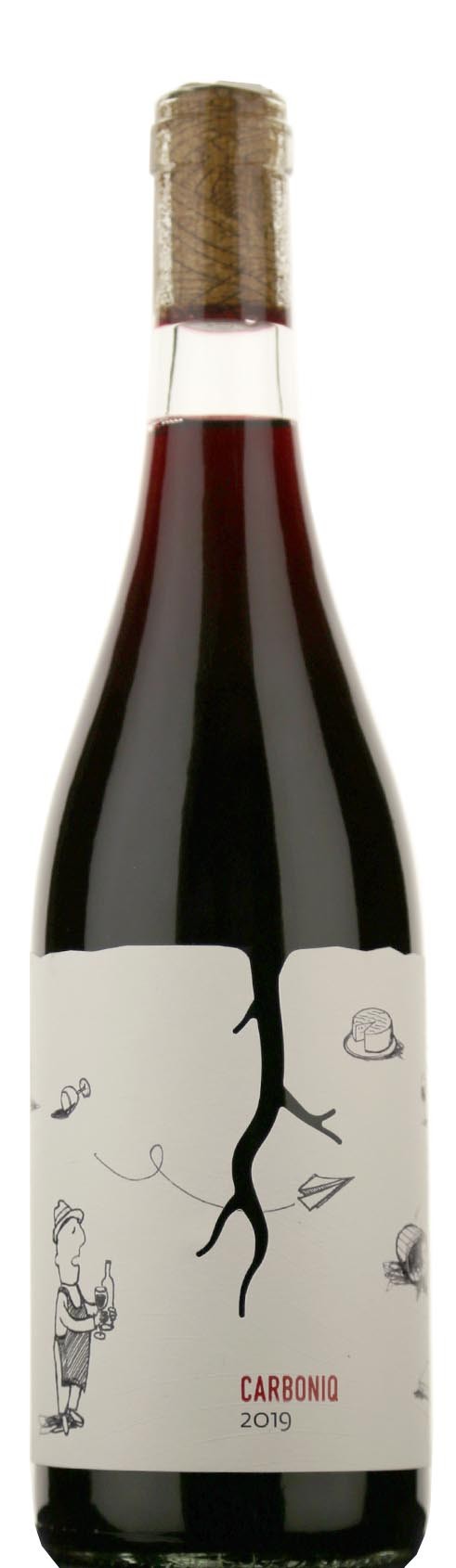
Magula Carboniq 2023 is an ideal choice for those seeking maximum freshness. Thanks to its incredibly swift journey from the vineyard to the bottle, this wine retains the primary energy and lightness of the berries. This creation from a Slovak family estate reflects a modern approach to natural winemaking: you will find no artificial additives here, only the pure taste of the grapes and the expressiveness characteristic of a biodynamic estate.
The aroma of "Carboniq 2023" is a true celebration of wild berries: notes of wild strawberries, alpine strawberries, and juicy forest raspberries unfold most prominently. On the palate, the wine is surprisingly fresh and soft, with its lightness accentuated by perfectly balanced acidity and an almost complete absence of sugar (residual sugar is a mere 0.2 g/l), giving the wine a "dry" and perfectly clean profile.
The wine's style is dictated by the carbonic maceration method, most commonly associated with the famous Beaujolais Nouveau. The finest and healthiest grape bunches are gently placed, uncrushed, into a vat filled with carbon dioxide. Fermentation begins not by yeast acting on the juice, but rather inside each individual berry. This is a process driven by the grapes' own indigenous yeasts. After about two weeks, the grapes are pressed, and fermentation is completed in the traditional manner.
Serve this wine chilled to 12–14°C; it pairs perfectly with a platter of light appetizers, soft cheeses (such as Brie or Camembert), and grilled poultry with a berry sauce.
Magula wine is an exceptional, naturally crafted wine from the Suchá nad Parnou region in Slovakia. Born at the foothills of the Carpathian Mountains, this biodynamic wine is ideal for natural wine enthusiasts seeking authentic terroir expression, spontaneous fermentation, and low-intervention winemaking.
Magula Winery History and Biodynamic Philosophy
The origins of the Magula estate date back to 1931 when Joseph Husar purchased land in the village of Suchá nad Parnou, located in the northern part of Slovakia. Although historical events of the mid-20th century and nationalization temporarily halted the family's activities, the descendants successfully revived the vineyards in 2001. The winery firmly established itself in the market in 2011 by presenting its first Blaufränkisch wines.
The estate relies on a strict philosophy of biodynamics, organic farming, and minimal intervention. Technological knowledge and best practices were adopted through collaboration with recognized natural winemaking masters (Ibor Melecsky, Zsolt Sütö) and biodynamic leaders (Claus Preisinger, Toni Hartl).
Production Methods and Wine Style
Magula's core values are naturalness and transparency. The wines stand out for their vitality, purity, and precise expression of the grapes, achieved by applying the following production principles:
Key Vineyards and Grape Varieties
The winery works exclusively with its own vineyards in the vicinity of Suchá nad Parnou. The fertile, mineral-rich soil and the Carpathian mountain microclimate give the wines a firm structure and fresh acidity. The plots are cultivated entirely without the use of synthetic chemicals.
The estate's main focus is on red wine, especially the 'Blaufränkisch' (known in Slovakia as Frankovka modrá) variety. These wines feature bright notes of dark berries, spices, herbs, and soft tannins. The winery also produces limited cuvée batches from carefully selected harvests.