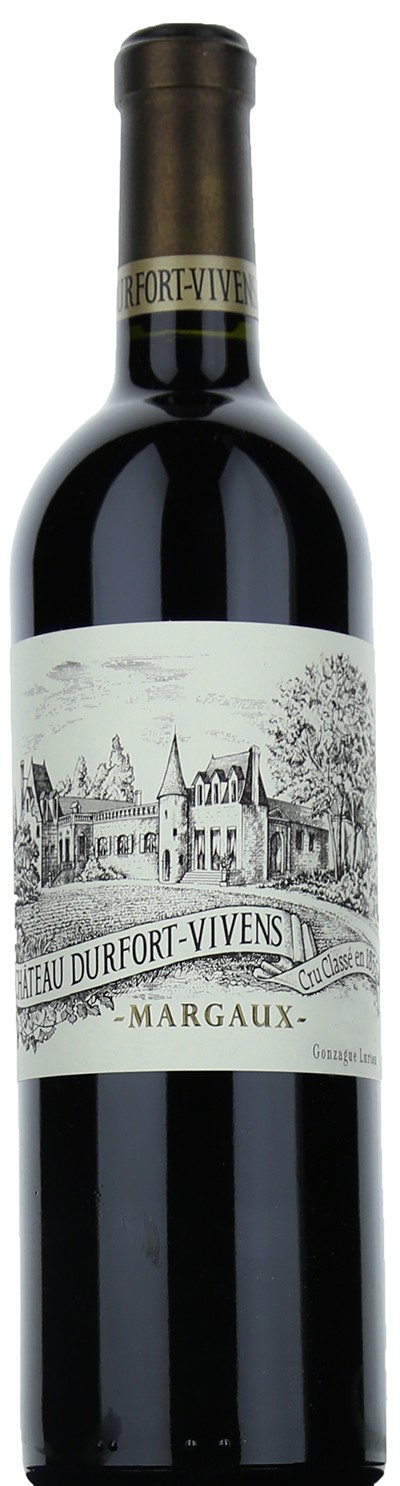
The actual product may vary from the images shown on the website.
Red dry
The vineyards of Château Durfort-Vivens, located near the Garonne River, cover an area of 62 hectares. Gravel soils dominate here. This is the first Margaux Crus Classés vineyard to receive both organic and biodynamic farming certifications. The aromas of Chateau Durfort wine stand out with notes of blueberries, blackberries and subtle accents of cedar. On the palate, the wine is medium-bodied, with gentle tannins and an atypically soft style for the estate, finishing with harmonious balance.
Serve at 16–18 °C with beef steak, osso buco stew or aged cheeses.
There’s a cassis bush nose, which introduces a medium-bodied red with plenty of tannin but no hint of hardness. A very nice, hand-crafted wine that’s already appealing. From Biodynamically grown grapes. _x000B_Drink in 2019.
Château Durfort-Vivens is a Bordeaux wine estate in the Margaux appellation. One of the grands crus classés (classified grands crus) of the Médoc, it was ranked as a second growth in the original 1855 Classification. The estate is overseen by Gonzague Lurton, who took over running the property in the early 1990s. It was one of the estates visited by future US president and known wine-lover, Thomas Jefferson, just before the French Revolution. Jefferson, who was then ambassador to France, produced his own ranking of the châteaux of the Médoc, rating Durfort-Vivens just under Lafite, Latour and Margaux. Like numerous holdings in the area, the estate in the post-revolutionary era of the 19th Century was marked by a succession of owners. This continued into the 20th Century before the château was bought by the Lurton family (who at that time also held a stake in Château Margaux, only a few hundred meters to the northeast) in 1937. In 1962, Lucien Lurton, of the same family, bought the estate. He passed the running of the château onto his son, Gonzague, in 1992. Since then, Gonzague Lurton has revamped the cellars and, in more recent times, converted the estate to organics (certified by Ecocert in 2015) and biodynamics (first certified by Demeter in 2017). The 55-hectare (136-acre) vineyard is planted on deep gravel soils over a sand and clay base. Roughly 70 percent of this is planted to Cabernet Sauvignon, with 24 percent Merlot and 6 percent Cabernet Franc.