The actual product may vary from the images shown on the website.
Red dry
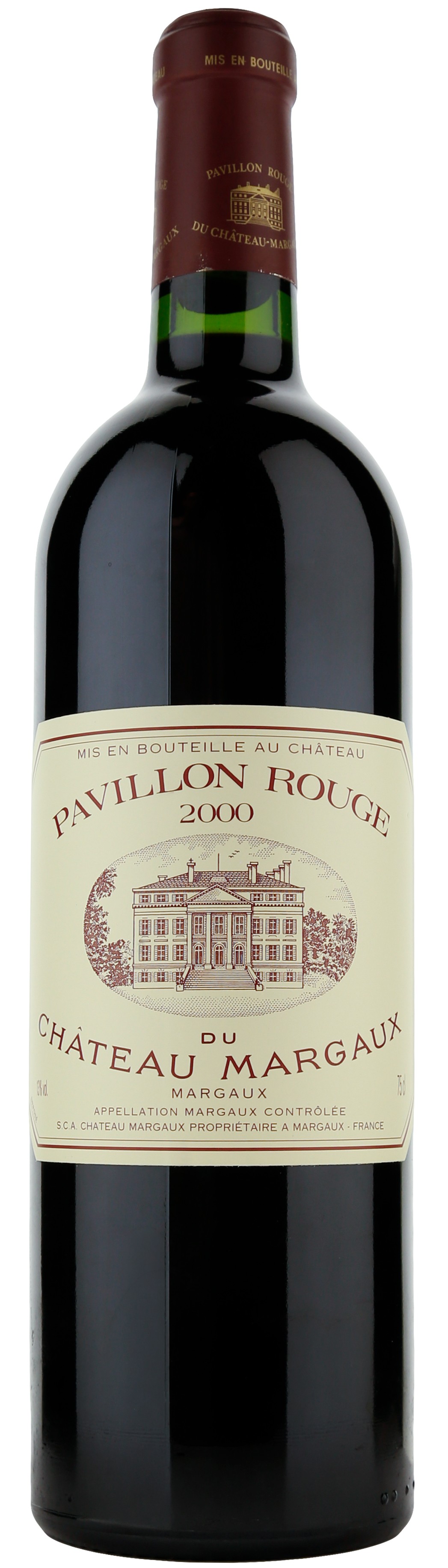
The historic second wine of Château Margaux, made from the same renowned Margaux terroir. Thanks to an exceptionally strict selection process, the „Pavillon Rouge“ included many high-quality lots, leading Château Margaux itself to describe this vintage as having the complexity and concentration of the first wine.
The nose reveals notes of blackcurrants, blueberries and blackberries, complemented by cedar, tobacco, leather, forest floor and subtle spices. Bottle ageing has added further depth to the aroma, bringing notes of dried leaves, earthy nuances and gentle smokiness. The fruit character remains lively, complemented by the classic aromatic complexity associated with mature Margaux.
On the palate, the wine is medium-bodied, rich and silky-textured, with lively acidity and fine, well-integrated tannins. Flavours of black fruits are complemented by cedar, tobacco, liquorice and subtle spices. The tannins have softened considerably, giving the wine a seamless texture and harmonious balance. The finish is long, dry and elegant, with lingering notes of fruit, spice and forest floor.
„Pavillon Rouge“ is made from Château Margaux’s vineyards within the Margaux AOC and is the estate’s historic second wine. The 2000 blend consists of ‘Cabernet Sauvignon’, ‘Merlot’, ‘Cabernet Franc’ and ‘Petit Verdot’. The wine was aged in French oak barrels.
Serve at a temperature of 17–18 °C; pairs well with beef tenderloin with mushroom sauce, roasted duck breast, and venison roast with juniper sauce.
Château Margaux is one of the five Premier Grand Cru Classé estates of Bordeaux included in the 1855 Classification. At the time, it was the only one of the four highest-ranked estates to receive the highest possible score – 20 out of 20. However, the classification merely formalised a reputation that Château Margaux had already established: in the 18th century, its wines were among the most expensive in Bordeaux, while Thomas Jefferson considered Château Margaux the finest wine of the Médoc.
The estate is located in the Margaux appellation of the Médoc and covers 265 hectares, around 100 of which are vineyards. Two major geological formations meet here: layers of limestone and clay, together with gravel, sand and clay deposits brought by the terraces of the Garonne. Deep gravel soils dominate the vineyards, providing good drainage and allowing the vine roots to reach deeper layers of the soil.
The distinctiveness of Château Margaux is defined not only by its soils, but also by a long tradition of working with individual plots. As early as the 17th century, different areas of the estate were assessed separately according to their suitability for particular grape varieties. This approach remains an important part of production today: the vineyard is not treated as a homogeneous whole, while combinations of soil types, exposures and grape varieties are evaluated separately.
The style of Château Margaux wines is defined by a precise balance between structure, aromatic complexity and elegance. The Margaux terroir is particularly well suited to 'Cabernet Sauvignon', which makes up the majority of the red wines and gives them tannic structure, aromatic depth and the ability to age for many years. Other varieties – 'Merlot', 'Petit Verdot' and 'Cabernet Franc' – are used according to the characteristics of each vintage.
At Château Margaux, tradition is not understood as an unchanging method of production. Since 1977, when the estate was acquired by the Mentzelopoulos family, there has been consistent investment in the vineyards, winemaking and research. The estate has its own research and development department, conducting trials in the vineyards and examining the effects of different cultivation methods on the vines and the resulting wines. At the same time, the historic 265-hectare structure of the estate has been preserved.
It is precisely this continuity that explains Château Margaux's position within the Bordeaux hierarchy. Its distinction lies not simply in a favourable terroir or historic reputation, but in its ability to consistently translate the potential of the site into complex, structured and long-lived wines, while preserving the aromatic subtlety and precise texture characteristic of Margaux.