The actual product may vary from the images shown on the website.
White dry
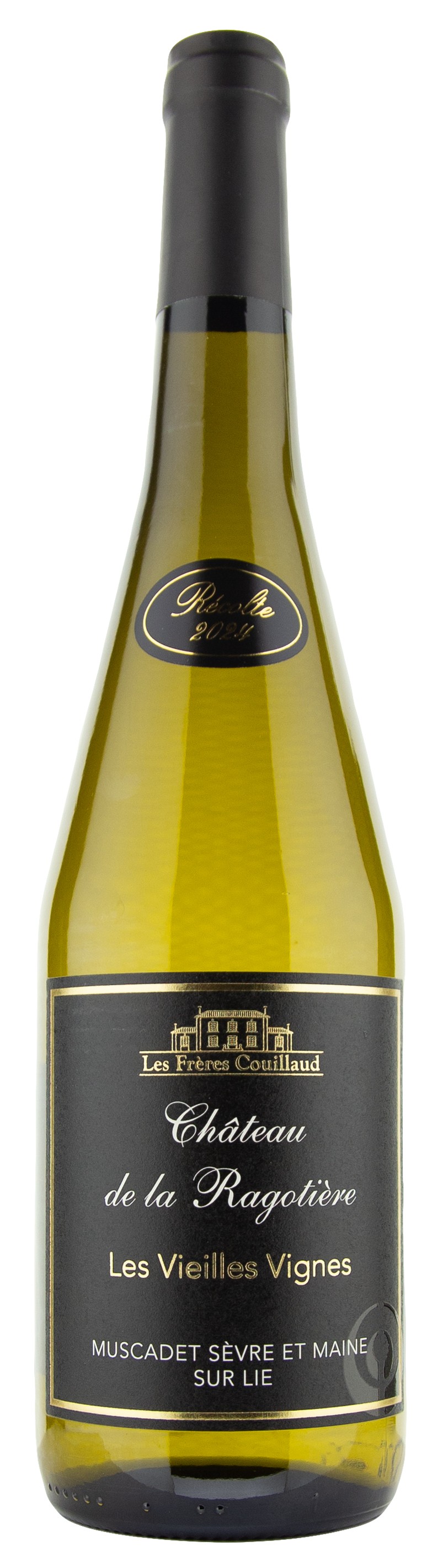
This Muscadet wine comes from the famous Muscadet Sèvre et Maine appellation, with grapes grown near the commune of Vallet Cru. The wine is made from grapes grown on old vines, with an average age of 50-60 years. The vineyards are south/southeast facing and grow on gravelly soil on a slope.
Pale lemon color, subtle aromas of lemon, green apples, and pears. The wine was aged with yeast for 10 months. Dry on the palate, with juicy and lively acidity, medium body and a subtle flavor, in which notes of wet stone and chalk stand out alongside green fruit.
Aging potential - 3-5 years.
Serve at 8-10 °C as an aperitif, with scallops, sushi, or baked white fish.
The history of Château de la Ragotière dates back to the 14th century, when the noble Loré de la Ragotière family established the estate. Since 1979, the property has been managed by brothers Bernard, François, and Michel Couillaud, who have become true ambassadors of the Muscadet region. Their vision is to achieve the highest quality and reveal the authenticity of the terroir while respecting tradition and at the same time embracing modern winemaking principles.
Château de la Ragotière wines are renowned for their freshness, elegance, and subtle minerality, characteristic of vineyards close to the Atlantic.
White wines (mainly from ‘Melon de Bourgogne’) show vibrant aromas of citrus fruits and white flowers, a mineral character, and a clean, precise acidity.
A signature regional style is Muscadet Sèvre et Maine sur lie, where the wine is aged on fine lees, gaining more texture, complexity, and a subtle creamy sensation.
The estate is located in the Sèvre et Maine appellation, the most prestigious Muscadet production area. Limestone, clay, and schist soils lend structure and minerality to the wines, while the Atlantic climate helps preserve natural freshness. The Couillaud family carefully tends their vineyards, aiming to craft wines that faithfully reflect the local terroir.
Château de la Ragotière wines are typically aged on their lees (“sur lie”) from several months up to a year. This process enriches the palate with roundness, texture, and additional complexity. While the wines are excellent when young – showcasing freshness and minerality – extended ageing allows them to develop subtle notes of maturity and depth.