The actual product may vary from the images shown on the website.
Sparkling dry
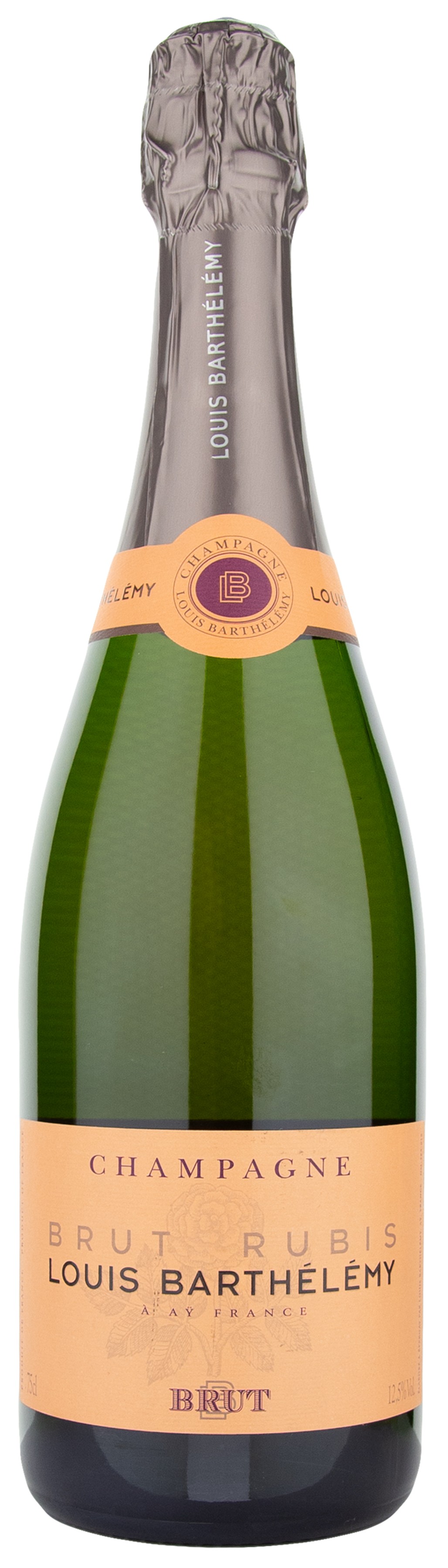
Champagne Louis Barthélémy Brut Rosé Rubis is the rarest wine of the house, produced only in exceptional vintages. This rosé Champagne reflects the estate’s craftsmanship and its ability to subtly balance elegance, structure, and fruit expression.
On the nose, aromas of cranberries, cherries, and delicate red berry nuances emerge. The palate is fresh and harmonious, showing notes of ripe blackcurrants supported by well-integrated acidity.
The blend consists of 70% ‘Chardonnay’, with the remainder made up of ‘Pinot Noir’, complemented by a small proportion of red wine from Champagne, which adds colour intensity and aromatic depth. The vines grow on chalk-rich slopes covered with clay and limestone, giving the wine its distinctive mineral character and elegant structure.
Produced using the traditional method, the Champagne is aged on its lees for three years, developing finesse, texture, and complexity. This is a refined, well-balanced, and gastronomic rosé Champagne that perfectly reflects the style of Louis Barthélémy.
Recommended serving temperature: 8–10 °C. Pair with tuna or salmon tartare, duck breast, or aged goat cheese.
Broad, firm and mouthwatering, with a fine bead adding a sense of finesse and a rich hint of roasted nut accenting notes of white raspberry, pineapple, toast, gumdrop and smoky mineral.
Louis Barthélémy – the Modern Spirit of Champagne
Louis Barthélémy is a Champagne house whose story speaks not only of tradition, but also of perseverance, vision, and the courage to create a distinctive style. Its origins date back to 1923, when Princess Baudry relocated to Épernay and founded a Champagne estate known at the time as Baudry Lebrun & Cie. The property was later taken over by the long-established Lombard family, but its true renaissance began at the start of the 21st century.
In 2002, the house was acquired by the Chancel family, already well known in the Rhône Valley for their estate Château Val Joanis. This marked a turning point. Not only did ownership change, but so did the entire philosophy. The new owner, Jean Barthélémy Chancel, envisioned a Champagne that would speak a contemporary language while remaining deeply rooted in classical craftsmanship. Thus, the name Louis Barthélémy was born — a symbol of respect for heritage combined with a bold creative direction.
The path to recognition in Champagne, however, was far from easy. Unlike other wine regions, vineyards here represent not only land but also a tightly knit and highly selective community. Even an experienced winemaker from another French region is often regarded as an outsider. It took ten years for Jean Barthélémy Chancel to earn the trust of local growers and gain access to top-quality fruit. This achievement came through patience, consistency, and an uncompromising commitment to quality.
Today, Louis Barthélémy Champagnes are crafted from carefully selected grapes sourced from some of the finest sites in Champagne. The winemaking philosophy focuses not on volume, but on precision. Every decision — from vineyard selection to ageing — is made to refine expression and preserve natural balance. There is no reliance on excessive technology or showmanship; the wines are shaped through craftsmanship, restraint, and time.
Stylistically, Louis Barthélémy Champagnes stand out for their energy, clarity, and structure. They are neither heavy nor sweet, yet far from austere. Instead, they combine vibrant acidity, concentrated fruit, and a refined texture. Often described as modern and confident, they nonetheless retain the backbone and elegance of classic Champagne.
Jean Barthélémy Chancel often compares his work to that of a sculptor:
just as form slowly emerges from stone, Champagne is shaped layer by layer, with patience and respect for the material.
This philosophy is evident in every bottle — from the purity of the aromatics to the long, graceful finish that defines the house’s signature style.