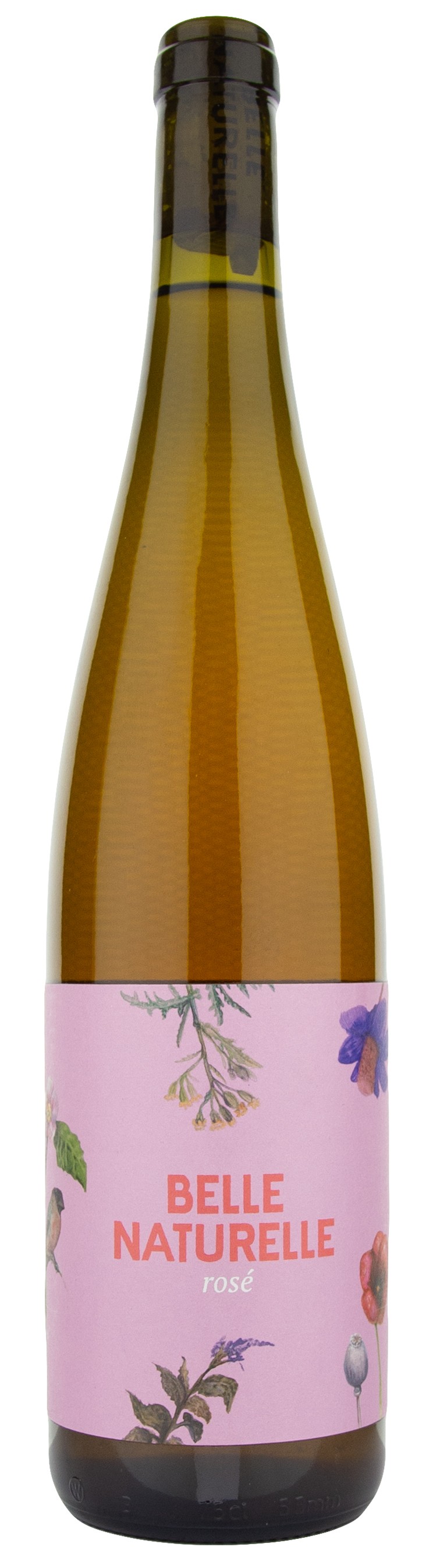
The actual product may vary from the images shown on the website.
Rose dry
Belle Naturelle Rosé was created through the power of the collective. The significant difference this time, however, was that we had no part in its conception - as we had no idea it was even in the making. In short, Belle Naturelle Rosé is the creation of our team and was poured for us as a surprise at a Christmas party a few years ago. Since we liked the idea and the wine tasted fantastic, the Belle Naturelle Rosé has been an integral part of our portfolio ever since. Hand-picked grapes of Zweigelt and Pinot Noir were pressed whole bunch as "blanc de noir". The bright juice fermented spontaneously with destemmed grapes of Cabernet Sauvignon in neutral Austrian oak barrels. The skin fermented Cabernet-Sauvignon grapes brought color and structure to the wine. After two weeks, the wine moved to used oak barrels where malolactic fermentation ended and then spent about six months on the lees in our 700-year-old cellar. Fermentation with a combination of berries gives a unique and complex natural wine with a high diversity of flavors.
Serve at 9-11 °C with Vienna schnitzel, sausages, goulash, salad.
Elegant, but round in style, this rosé is copper in color and shows the wild side of the category, in the best way possible. Rooibos and rose petal glide along the earthy cherry. There is an almost salty note that marks the finish.
Jurtschitsch is located at the historic Sonnhof Estate in northern Austria, in the renowned Kamptal wine region. The estate’s cellar history dates back to the 14th century, when the land was cultivated by monks. In 1868, the property was acquired by the Jurtschitsch family, who have since preserved winemaking traditions with deep respect for nature while embracing innovation.
Innovation leaders in Austrian winemaking
Over time, Jurtschitsch has become one of the most forward-thinking wineries in Kamptal. They were pioneers in the region to:
Today, the name Jurtschitsch stands worldwide for exceptional quality, consistency, and sustainability.
Vineyards and key grape varieties
The majority of the vineyards are dedicated to white grape varieties, with particular focus on:
The family works meticulously with single-vineyard bottlings, emphasizing natural diversity and terroir expression—an approach highly regarded by wine professionals and collectors.
GruVe – where art meets wine
Since 1987, Jurtschitsch has released a special “GruVe” Grüner Veltliner each year, featuring a label designed annually by a different artist. It is not only a high-quality dry white wine, but also an ongoing art project that attracts wine lovers and creatives around the world.