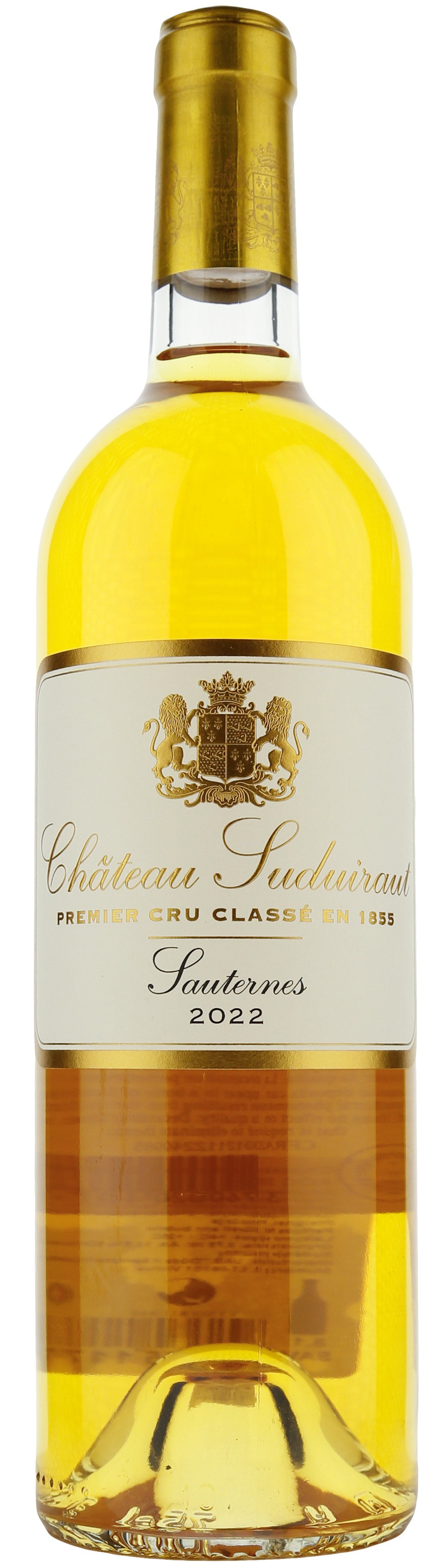
The actual product may vary from the images shown on the website.
Sweet sweet
One of the great names of Sauternes. A 1er Grand Cru Classé estate located next to Château d’Yquem, where Sémillon and Sauvignon Blanc express the noble elegance of botrytised grapes.
On the nose, it opens with orange zest, dried plums, honey, and fresh apricot. These are followed by notes of pineapple, exotic fruits, orange blossom, and acacia, with a delicate line of ginger, nutmeg, and the gentle spiciness brought by noble rot.
On the palate, the wine is concentrated yet soft, with the distinctive creaminess of Sémillon. Its luscious sweetness is lifted by vibrant acidity. The flavour is dominated by honey, lemon curd, apricot, and tropical fruit, ending with a subtle saline limestone finish that provides freshness. The aftertaste is long and warm, echoing dried fruits and balsamic herbs.
The identity of Château Suduiraut is shaped by its sand–gravel terraces over a limestone base, which naturally limit yields and enhance fruit concentration. The unique Sauternes microclimate, where the Ciron River meets the Garonne valley, produces cool morning mists and sunny afternoons — ideal conditions for the development of botrytis cinerea.
The harvest is carried out in several passes, selecting only the grapes with the most ideal noble rot. Fermentation takes place in small tanks using natural yeasts. The wine is aged for 18–20 months in French oak barrels, often 50–60% new oak.
Serve at 10–12 °C with foie gras with fig jam, blue cheese (Roquefort), and duck glazed with orange sauce.
So many aromas of dried apricots, turmeric, pine nuts and botrytis. Full-bodied with 190 grams of sugar and incredible length and richness. The salted caramel, light nuts and dried fruit go on for minutes. 100% semillon. A great sweet wine. Drinkable already but will age for ages. Better in three or four years but already gorgeous.
Château Suduiraut is a wine estate of the Sauternes appellation on the southern bank of Bordeaux, classified as Premier Cru Classé in the 1855 Bordeaux Classification, a status that reflects its long-standing reputation for quality among producers of sweet Bordeaux wines.
The history of the estate dates back to the 17th century, when the property belonged to well-known Bordeaux landowners and winegrowers. In the 18th century, the name Suduiraut became associated with the production of high-quality sweet white wines. For many years the dominant variety on the estate has been ‘Sémillon’, complemented by ‘Sauvignon Blanc’ and ‘Muscadelle’, creating a style that has long earned critical acclaim for its concentration, aromatic depth, and ageing potential.
The vineyards cover approximately 90–100 hectares and are dedicated to the production of sweet Bordeaux wines. The main variety is ‘Sémillon’, which, due to its thin skin, is particularly susceptible to Botrytis cinerea (noble rot), the microorganism that gives the wines their concentrated aromatic and flavour nuances as well as the balance of sweetness, acidity, and mineral structure that defines classic Sauternes. Alongside ‘Sémillon’, the vineyards are planted with ‘Sauvignon Blanc’ and a small proportion of ‘Muscadelle’.
The Suduiraut microclimate is characterized by morning mists from the Gironde River and daily temperature variations, which encourage the development of noble rot. Thanks to this phenomenon, Sauternes wines gain exceptional aromatic intensity and a distinctive sweetness structure. The harvest is carried out by hand in several passes in order to select only perfectly botrytized fruit, forming the basis for wines with excellent concentration and longevity.
After fermentation, the wine is aged in French oak barrels, a proportion of which are new, providing additional structure, aromatic complexity, and ageing potential. As a result of this ageing strategy, Suduiraut wines display remarkable complexity, ranging from aromas of honey, citrus fruits, and apricots to subtle spicy and nutty nuances that continue to evolve with time.
Château Suduiraut wines are balanced, elegant, and complex, with a harmonious integration of acidity and natural sweetness, enabling them to age for several decades. They regularly receive international recognition from critics and collectors alike, and are regarded as some of the most representative examples of the Sauternes appellation.